

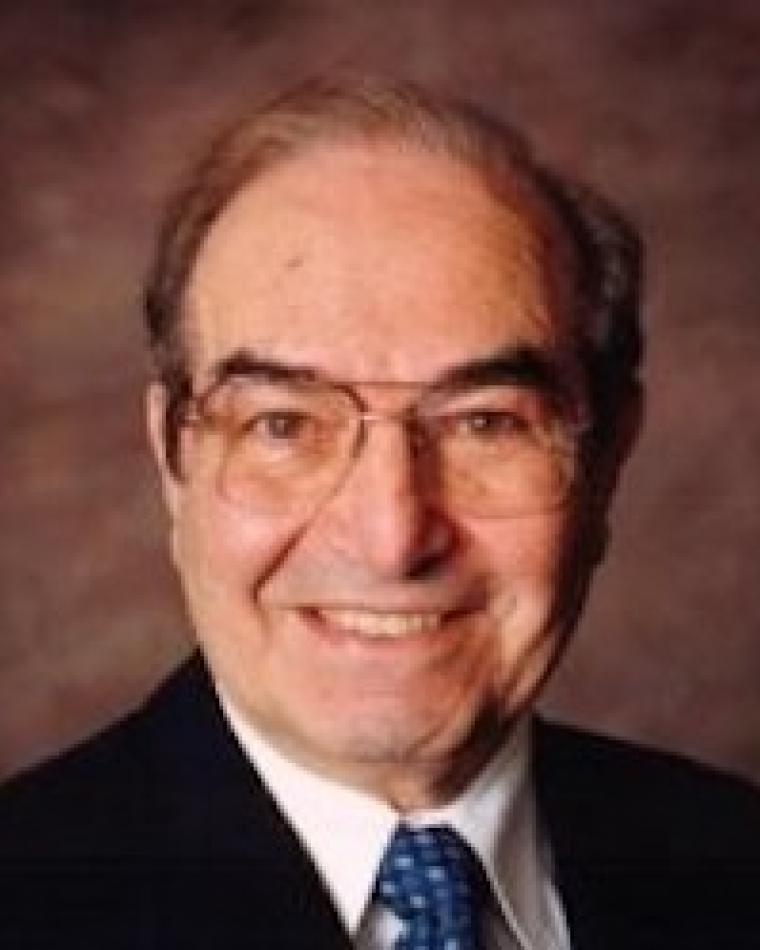
Carl H. Rosner
Carl H. Rosner
Contact Menu
An arc of bright light began in Hamburg, Germany on Saturday, April 4, 1929, and ended in Schenectady on April 16, 2022, also a Saturday.
Despite (and also because of) having survived some of the most horrific episodes of World War II, Carl H. Rosner was a fierce optimist with an enduring commitment to living with purpose and meaning. During an especially tumultuous period of history, Carl H. Rosner spent several childhood years in an orphanage and endured one year as a teenager in the Buchenwald concentration camp. His early education had been interrupted by the forced closure of his Jewish school by the Nazis when he was in seventh grade. For the next several years, he managed to retain a voracious appetite for reading and self-education. It wasn't until he migrated to Sweden in 1945, following the liberation of Buchenwald by American troops, that Carl resumed his formal studies while working full-time.
He graduated in 1950 with a tele-electrical engineering degree from Stockholm's Technical Institute. It was in Stockholm that Carl met his future wife, Frieda; she was also a Holocaust survivor, from Vilna, Lithuania, who was in Sweden with her parents awaiting visas for America. The couple married in Israel and migrated to the U.S. in 1952. By 1955, Carl graduated from Newark College of Engineering and was hired by G.E. He subsequently earned an M.B.A. from R.P.I. in 1963. Working with other pioneers at the General Electric Research and Development Lab, he played a substantial role in making the world's most powerful superconducting magnets. He then led Intermagnetics General (IGC was a spin-off from General Electric) to success as a prime manufacturer of MRI magnets. Rosner and his coworkers helped change our world by designing better MRI technology.
While becoming a pioneer in superconductivity and a Wizard of Schenectady, he also helped raise a family, and worked to serve both his civic and Jewish community. Together with his late wife Frieda, who passed away in 2000, he enjoyed meaningful close friendships with other World War II refugees, treasuring the freedom and quality of life provided in the U.S. He took special pride in the outstanding education his children were able to receive at the best universities in the country.
Always, Carl purposefully chose to focus on the future, to devote himself to "doing good." He also "did well," one could certainly say. But all of his efforts in the name of achievement were motivated by a belief that his own miraculous survival demanded of him a lifetime of helping others, whether in the form of generous philanthropy or by way of scientific innovation. He received numerous awards at both state and national levels, and was inducted into the National Academy of Engineering in 1996. He received the Entrepreneur of the Year Award in 1992 for Manufacturing by Inc. Magazine and Ernst & Young. In 2010, he helped establish the IEEE Council on Superconductivity Carl H. Rosner Entrepreneurship Award.
Carl was a righteous man who assiduously shared the story of his fortunate and stubborn Holocaust survival with students of all ages. He wanted all of us to learn from history, to deepen and expand our humanity, to question authority and pursue justice. Among many other indelible lessons, he taught us to love words and books, to follow our minds' inquiries, and to believe in tomorrow's possibilities. As a husband and father, he was devoted and generous, wise and honest, loyal and forgiving. As an applied scientist, he was relentlessly curious and committed to the pursuit of practical innovations that would improve the lives of others. As a businessman, he was fair and tenacious, always treating his colleagues and employees with consideration and respect. As a Holocaust survivor, he was unwavering in his determination to live a meaningful life. As a friend, he was kind and caring, trustworthy and authentic. As a human being, he was ever-evolving, a beacon of inspiration, resilience, and hope. In departing this world, Carl H. Rosner leaves behind one of his two younger brothers, Joseph Rosner of Bnei Brak, Israel; three children, Monica R. Brettler of Newton, Mass., Elizabeth Rosner of Berkeley, Calif., and Raphael Rosner of Marlboro, Vt. (spouse Saint Rosner); six grandchildren, Talya Brettler (spouse Immanuel Buder), Ezra Brettler (fiancee Maya Sztainer), Frida, Meroushka, Chloe and Theodore Rosner; one great-grandchild, Eliana Brettler Buder; and many bereft friends, including and especially his longtime executive assistant Cathy Arduini. He also leaves a legacy of perseverance against obstacles, and a history of remembrance in the pages of his daughter Elizabeth's books.
- From Legacy.com, Published by Albany Times Union on Apr. 19, 2022.